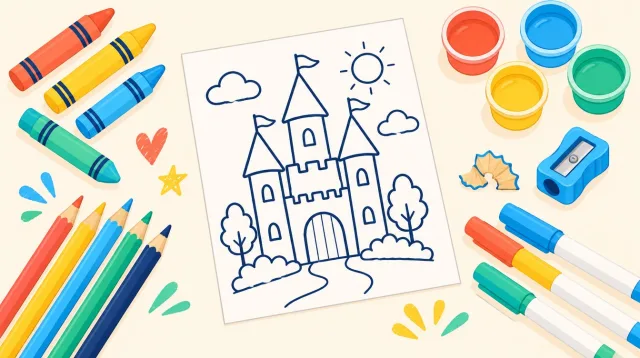
Teaching colors to kids is one of the first learning skills parents enjoy working on. It builds vocabulary and teaches observation and sorting. The best way to teach colors is not flashcards and memorization, but play and coloring in everyday moments. Here we answer when children learn colors and share ten simple activities to try at home.
When do children recognize colors?
Babies see colors early, but naming colors is a language skill that comes later. Many children start matching similar colors between 18 months and two years. Then they recognize a color when you name it, and naming colors correctly on their own usually comes between two and a half and three and a half. Mixing up colors for a while is a normal part of learning.
Start with primary colors
When teaching colors to kids, start with two or three colors such as red, blue and yellow. Add green, then orange and purple once those are solid. Too many colors at once slows learning.
10 fun activities
1. Color and name
While coloring, say the color each time: "You chose yellow for the sun." Natural repetition beats any flashcard.
2. One color for the whole picture
Pick a "color of the day" and fill a picture with shades of it. Try the magic unicorn in one color, then again in rainbow colors.
3. Color by instruction
"Color the cloud blue and the stars yellow." This combines colors with following directions.
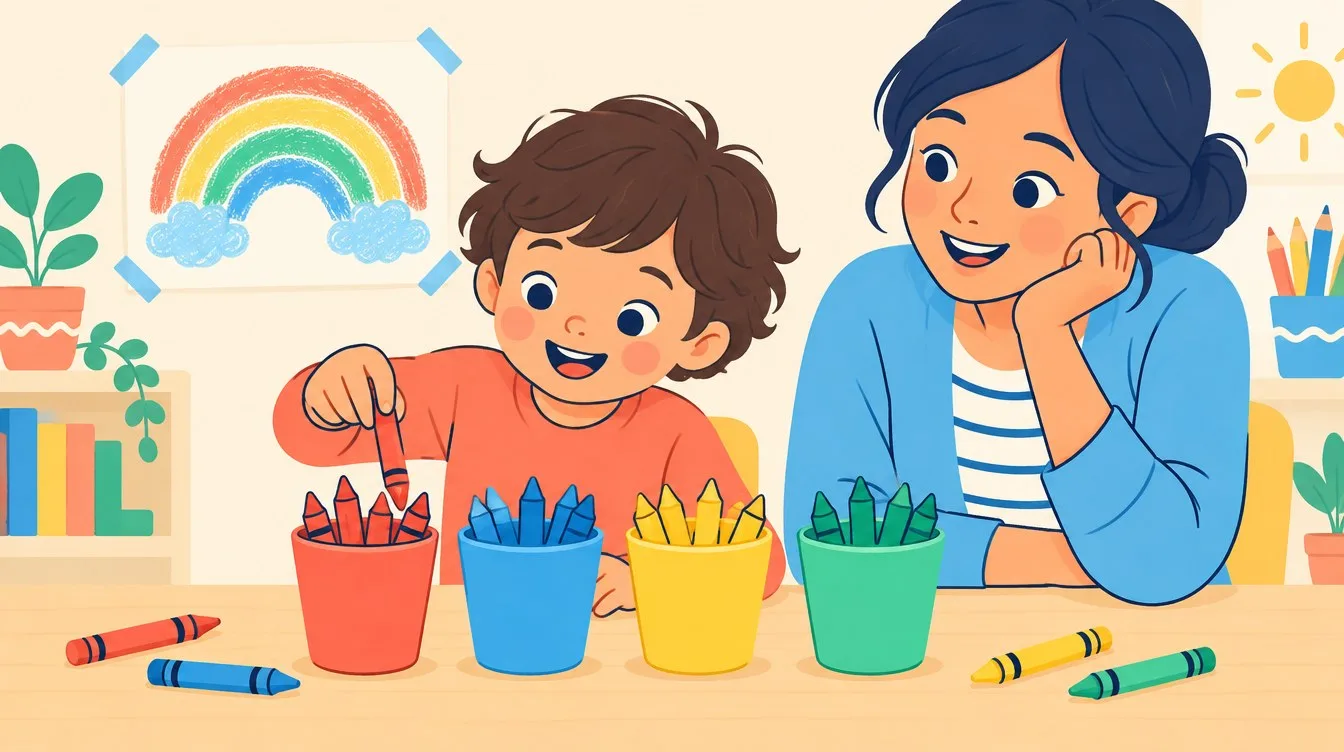
4. Sort crayons
Set out colored cups and ask your child to put each crayon in the matching cup.
5. Color hunt
Play "bring me something red" around the house.
6. Mix colors
For kids over three, mix yellow and blue watercolor and watch green appear.
7. Rainbow coloring
Color the rainbow in the unicorn page in the right order and name each color.
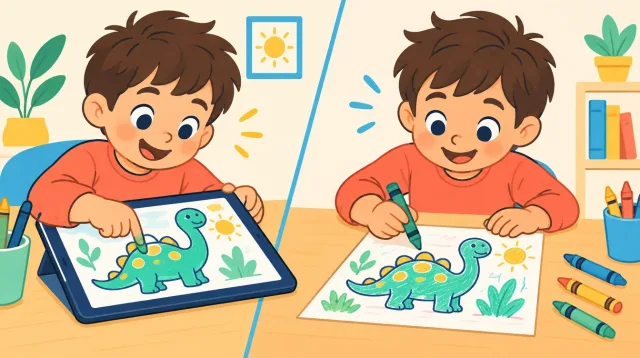
8. Screen coloring
Tap-to-fill lets kids try many colors quickly and undo, which encourages experimenting. Try coloring the castle online.
9. Color stories
Read a short story, point to colors in the pictures, then color a scene from it together.
10. Nature colors
Collect leaves and flowers on a walk, then color our nature coloring pages with the colors you found.
Teaching colors in two languages
Use each language in a consistent context, for example Arabic while coloring and English while sorting. Children can learn two languages together, and fun repetition is the key.
Common mistakes
- Harsh correction when a color name is wrong.
- Introducing too many colors at once.
- Relying on memorization instead of play.
Frequently asked questions
My three-year-old mixes up colors. Is that normal?
Yes. Many children know that colors exist before they link each name to the right color. Keep naming colors during play without testing. If mixing certain colors like red and green continues after age five, consider an eye check with your doctor.
Are flashcards useful?
They can be a small part of play, but real-life moments work better. The yellow of a banana or the blue of the sky sticks in memory more than a card.
Teaching colors to kids is a joyful journey when it is part of daily play. Print a free page in A4 or Letter size, or start coloring online now.